

Planning treatment away from home can feel overwhelming, especially when you’re comparing countries, hospitals, costs, and recovery support. The good news is that medical travel in India has become a structured experience for many NRIs and international patients, with dedicated international patient desks, package estimates, and end-to-end coordination (from report review to follow-up care).
Most international patients can expect a step-by-step journey: share medical reports → receive an opinion and estimate → choose hospital/doctor → arrange visa/travel → complete tests and procedure → recover with discharge guidance → continue follow-ups remotely after returning home. Total cost typically includes treatment + diagnostics + hospital stay + medicines + travel/logistics, so budgeting should be done as a complete plan.
This blog explains medical tourism in India for patients, realistic costs, the process, what hospital care looks like on the ground, and how aftercare works so you can plan confidently and safely.
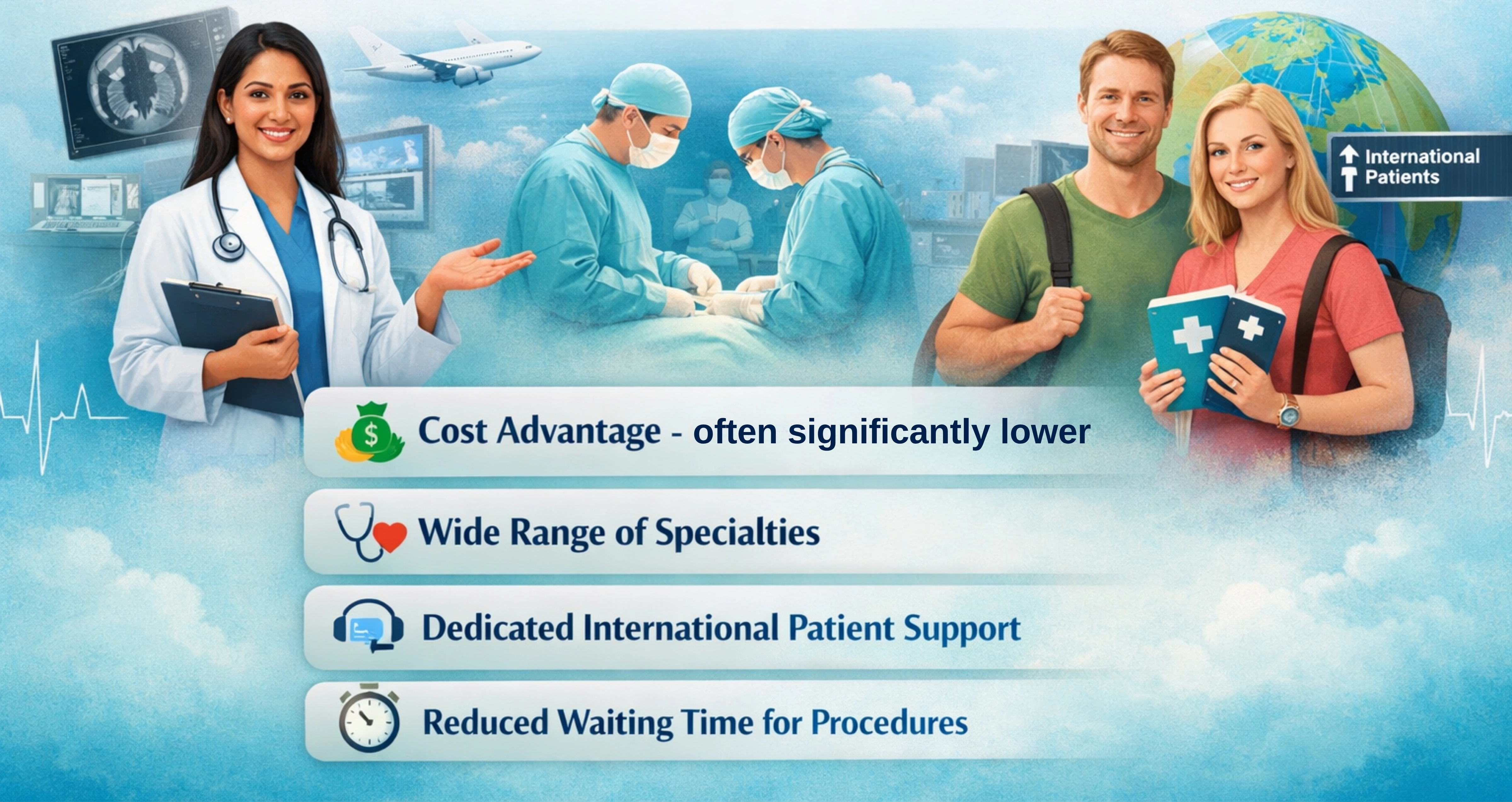
Medical travel in India typically offers cost-efficient treatment options, strong specialist availability, and dedicated international patient support for scheduling, estimates, and follow-up planning.
People choose medical tourism in India for patients for practical reasons, not just price. In many cases, the decision comes down to a mix of affordability, availability, specialist access, and support services.
When people search “cost of treatment in India,” they often see a single number. In real planning, you’ll want to budget for the full journey, not only the procedure.
Pre-treatment online review: video consultation (sometimes), report evaluation, and treatment plans.
Diagnostics: blood tests, imaging (CT/MRI/X-ray), ECG/echo, pre-anesthesia checks
Procedure and doctor fees: surgeon fees, anesthetist fees, operation theatre charges, and implants/prosthetics (if applicable)
Hospital stay: room category (shared/semi-private/private/suite), ICU charges (if needed), and nursing and monitoring.
Medicines and consumables: post-op medicines, dressings, disposables
Rehab and recovery support: physiotherapy sessions (common for orthopedic surgeries) and diet counseling where needed.
Travel and logistics: flights, local transport, hotel/guest house (before/after hospital stay), attendant stay, and food.
Many hospitals offer:
What you should always ask for:
A written list of inclusions and exclusions—especially for implants, extended stay, ICU, additional scans, and complications.
If you’re planning medical care in India for international patients, the process is usually more structured than most first-timers expect. Here’s the typical flow.
Best practice: Send the latest reports and ensure they’re readable. A correct case review depends on accurate documentation. You’ll usually share: diagnosis documents, recent scans/labs, current medications, past medical history, allergies, and any previous treatment details.
After review, you may receive: Recommended procedure options, expected stay duration, estimated cost range (package or itemized), and a proper timeline for treatment and recovery.
Tip for clarity: Ask for a “best-case and worst-case” estimate so you can budget properly.
Choosing a hospital and doctor before confirming the medical tourism agency is an important part of the whole treatment journey. It is also the most tedious task to shortlist the best hospital as well as doctors.
Thus, Selection should be based on: doctor specialization and experience in your procedure, hospital accreditation and safety standards, and transparency in the estimate and communication.
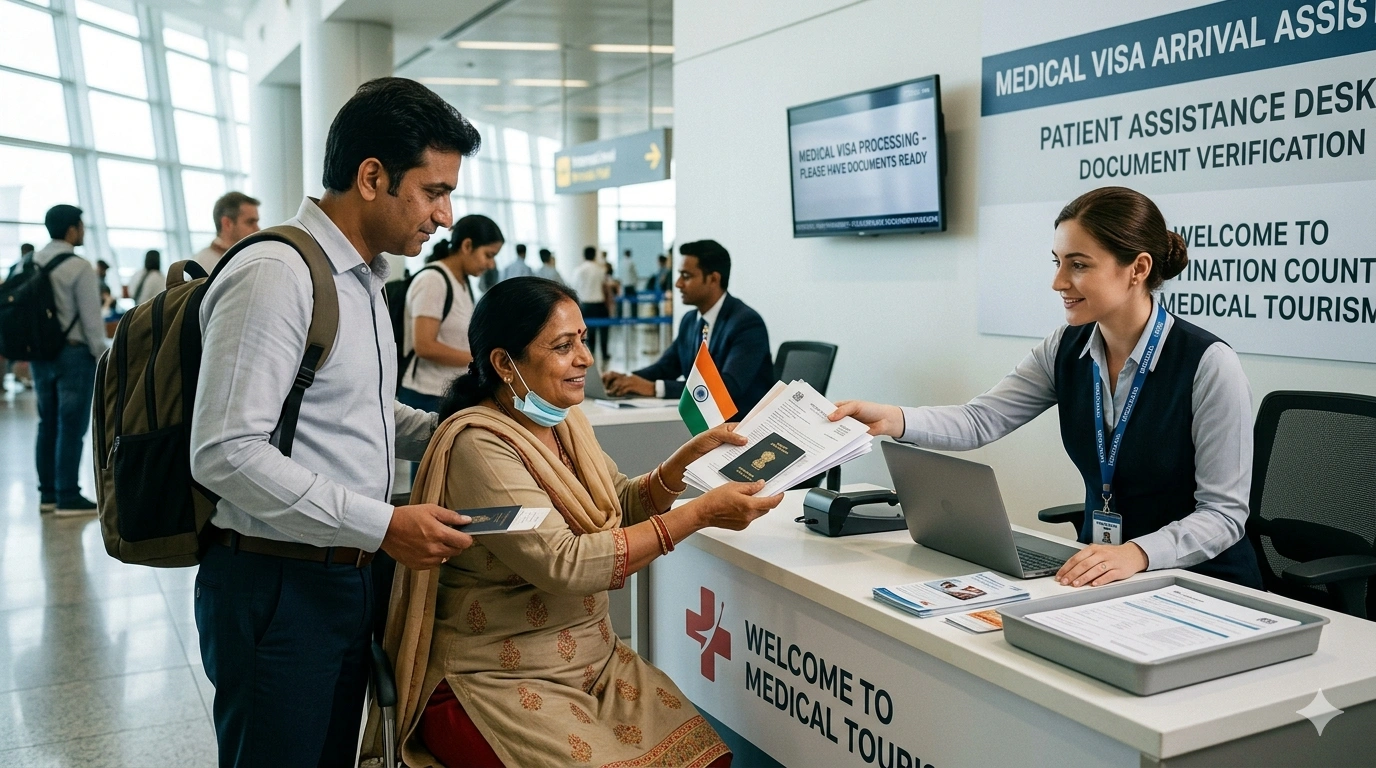
Visa type and documentation requirements vary by nationality and case. Many patients apply for a medical visa (and attendant visa for a companion). Always check the latest guidelines on official channels before applying.
During the treatment journey, local stay as well as transportation facilities can’t be ignored. Thus, typical planning includes: arrival 2-4 days before procedure (depending on tests needed), accommodation near the hospital (if pre-op stay is needed), and city transport and support services.
Even after finalizing the local stay and best hospital and doctors' arrival support, like hospital registration, is important and can’t be ignored for later. Upon arrival, many patients complete hospital registration, undergo pre-op tests and specialist consultations, and finalize consent forms and the admission process
Hospital stay can be extended depending on the medical treatment and recovery, and so is the discharge planning. In-hospital care typically includes: daily rounds by doctors, nursing monitoring, pain management, physiotherapy (if needed), and discharge summary + medication plan.
The medical travel process in India usually starts with an online case review, followed by visa and travel planning, hospital admission, treatment, recovery, and follow-up care after you return home. Thus, before you fly back, you should have:
Visa and paperwork are often the most stressful part for first-timers. Keep it simple: start early and follow official sources.
While requirements depend on your country and current rules, international patients commonly keep:
Many patients travel with a family member for support. Confirm:
NRIs may have additional flexibility depending on status (OCI/PIO). Still, for medical planning, the key is: insurance and reimbursement clarity, the duration of stay for recovery, and ID documents needed for hospital registration.
Important note: Visa rules can change. Always verify the latest requirements using official government/embassy sources before applying.
For medical care in India for international patients, choosing the right provider is the difference between a smooth experience and unnecessary stress.
Look for recognized accreditations such as:
Accreditation does not guarantee outcomes, but it reflects structured standards for safety, quality, and processes.
Make sure the doctor has:
During your planning calls, evaluate:
For commercial intent, this is critical. Ask:
A helpful international patient team or a medical tourism company can make your experience smoother by coordinating appointments, admission timing, interpreters, local stay, and documents. These are the Top 10 Benefits of Choosing a Medical Tourism Company in India.
Though there are a number of medical tourism agencies in India, selecting the best remains challenging, and one needs to ask a few very non-negotiable questions about the services provided by them. Well, to make it easier, make sure to ask these 20 Questions to Ask Before Hiring a Medical Tourism Company in India.

A good medical travel experience doesn’t end at discharge. The real long-term value comes from clear aftercare and follow-up planning.
Before leaving India, ensure you have:
Most international patients follow a plan like:
Safe-to-fly timing depends on procedure type, individual recovery, and the doctor's advice. Always follow your treating doctor’s recommendation and do not rush travel if mobility, wounds, or complications are a concern.
Why Booking a Medical Tourism Company Before Coming to India Can Change Everything. A patient from Kenya planned to travel to India for a major heart treatment, assuming he could arrange everything after landing.
But once he arrived, he faced hospital comparison issues, language barriers, hotel problems, and delays in doctor appointments. His family also struggled with airport transfers, medical paperwork, and understanding the treatment cost structure. Later, they connected with a medical tourism company in India, which quickly organized hospital coordination, doctor consultations, accommodation, and local support.
The company also helped them choose the right hospital based on budget, treatment quality, and recovery needs. As a result, the patient started treatment faster and avoided unnecessary stress during a critical health situation.
This case shows that pre-booking a trusted medical tourism company can save time, reduce confusion, and improve the overall treatment journey. It also gives patients better cost clarity, travel assistance, and continuous support from arrival to discharge.
For international patients, planning treatment support before moving to India is not just helpful, but often essential.
Even well-planned medical travel can face bumps. Here’s how to prevent the most common issues.
Challenge 1: Underestimating recovery time
Solution: Build buffer days into your itinerary and avoid booking tight return flights.
Challenge 2: Misunderstanding package inclusions
Solution: Get written inclusions/exclusions and ask, “What might increase cost?”
Challenge 3: Communication gaps
Solution: Use one primary coordinator contact and request a written plan (timeline + steps).
Challenge 4: Insurance and reimbursement confusion
Solution: Ask your insurer what documents they need before you travel, and ensure the hospital can provide itemized bills and discharge summaries.
Challenge 5: Trying to combine tourism too soon
Solution: Keep tourism light, and only after your doctor clears you. Recovery comes first.
If you’re considering medical tourism in India for patients, the best results come from planning beyond the procedure: budget for the full journey, choose the right hospital and specialist, confirm documentation early, and build a clear aftercare and follow-up plan.
With the right coordination, medical care in India for international patients can be organized, transparent, and recovery-focused—especially when you prioritize safety, communication, and realistic timelines.
It can be safe when you choose reputable hospitals, confirm accreditation (where applicable), verify doctor specialization, and follow standard infection-control and aftercare guidance. The safest approach is to plan with a written estimate, clear inclusions/exclusions, and a defined follow-up plan, plus a companion for support in case of a longer recovery.
Costs vary widely depending on the procedure, hospital category, city, implants used, and length of stay. Instead of relying on a single online price, request a written estimate based on your medical reports and budget for diagnostics, hospital stay, medicines, travel, attendant costs, and a contingency buffer.
It depends on your procedure and report readiness. Many patients spend time on online case review and scheduling first, then travel for diagnostics and treatment, followed by recovery and follow-ups. For planned surgeries, it’s smart to keep flexibility in dates to allow for pre-op tests and recovery time.
Requirements depend on the current official rules and your nationality. Commonly, patients keep a passport, photos, medical reports, and hospital appointment/communication documents. Always check the latest information through official embassy or government sources, because documentation rules can change.
Many large hospitals offer international patient services such as scheduling support, admission coordination, and help with documentation. Interpreter availability depends on language demand and hospital resources. If you need language support, confirm it before booking and ask what languages are available.
Yes, but only with careful planning. Keep tourism light and schedule it after your doctor confirms you’re fit for travel and walking activity. For surgeries, it’s usually smarter to focus on recovery first and keep tourism minimal until you are stable.
Follow-ups usually include teleconsultations, sharing reports digitally, and coordinating with a local doctor for rehab or ongoing care. Before leaving India, ensure you receive a detailed discharge summary and a clear follow-up schedule so your home-country doctor can continue care smoothly.