 new.webp)
A brain tumor diagnosis changes everything — instantly. The next question most families from the UAE, Oman, KSA, Ghana, Iraq, Yemen, Myanmar, Kazakhstan, Uzbekistan, and Kyrgyzstan ask is: "Where do we go for the best treatment at a cost we can actually afford?" This guide answers that question honestly, completely, and practically.
Every year, thousands of patients from across the Middle East, Africa, and Central Asia travel to India for brain tumor treatment — and the reasons go far beyond cost.
World-Class Neurosurgery at a Fraction of the Price
India's top neurosurgery centres offer the same technology and clinical protocols as institutions in the United States, United Kingdom, and Germany — including Gamma Knife radiosurgery, CyberKnife stereotactic treatment, neuro-navigation surgery, awake craniotomy, and intraoperative MRI — at 60 to 80 percent lower cost.
Internationally Accredited Hospitals
The leading brain tumor hospitals in India hold JCI (Joint Commission International) accreditation — the same global quality standard that certifies Johns Hopkins, Cleveland Clinic, and top European cancer centres. NABH accreditation governs domestic quality benchmarks. These are not honorary certificates. They regulate surgical protocols, infection control, nursing ratios, and patient safety at every step.
High-Volume Expertise
India's top neurosurgery programmes handle some of the largest caseloads in Asia. Volume matters in neurosurgery — surgeons who operate every day develop precision that is simply unavailable in lower-volume settings. Senior neurosurgeons at Apollo, Fortis, Max, and Medanta have performed over 10,000 brain surgeries each.
No Language Barrier for Most Patients
Medical teams at top Indian hospitals communicate fluently in English. For patients from Arabic-speaking countries (UAE, Oman, KSA, Iraq, Yemen), Arabic-speaking patient care coordinators are typically available. For patients from Myanmar, Kazakhstan, Uzbekistan, Kyrgyzstan, and Ghana, English-medium care is accessible and patient coordinators bridge any gap.
Short Waiting Times
Unlike public health systems in the UK, Canada, or parts of Europe, there are no long waiting lists in Indian private hospitals. Appointments with senior neurosurgeons can typically be arranged within 3 to 7 days of submitting medical reports. In urgent cases, this can be done faster.
India's top neuro-oncology centres treat the full spectrum of brain and central nervous system tumours:
Secondary brain tumors from lung, breast, kidney, colorectal, and skin (melanoma) cancers are increasingly common. India's radiosurgery centres — using Gamma Knife and CyberKnife — treat single and multiple brain metastases with sub-millimetre precision, often without open surgery.
Intradural and extradural spinal tumors, including spinal meningiomas and ependymomas, are treated at the same neurosurgery centres with intraoperative neurophysiological monitoring (IONM) to protect function.
Surgical removal of the tumor — either complete (gross total resection) or partial (debulking) — remains the primary treatment for most operable brain tumors. India's top centres offer:
Brain tumor surgery in India costs approximately USD 4,000 to USD 12,000 depending on the complexity, hospital tier, and technology used.
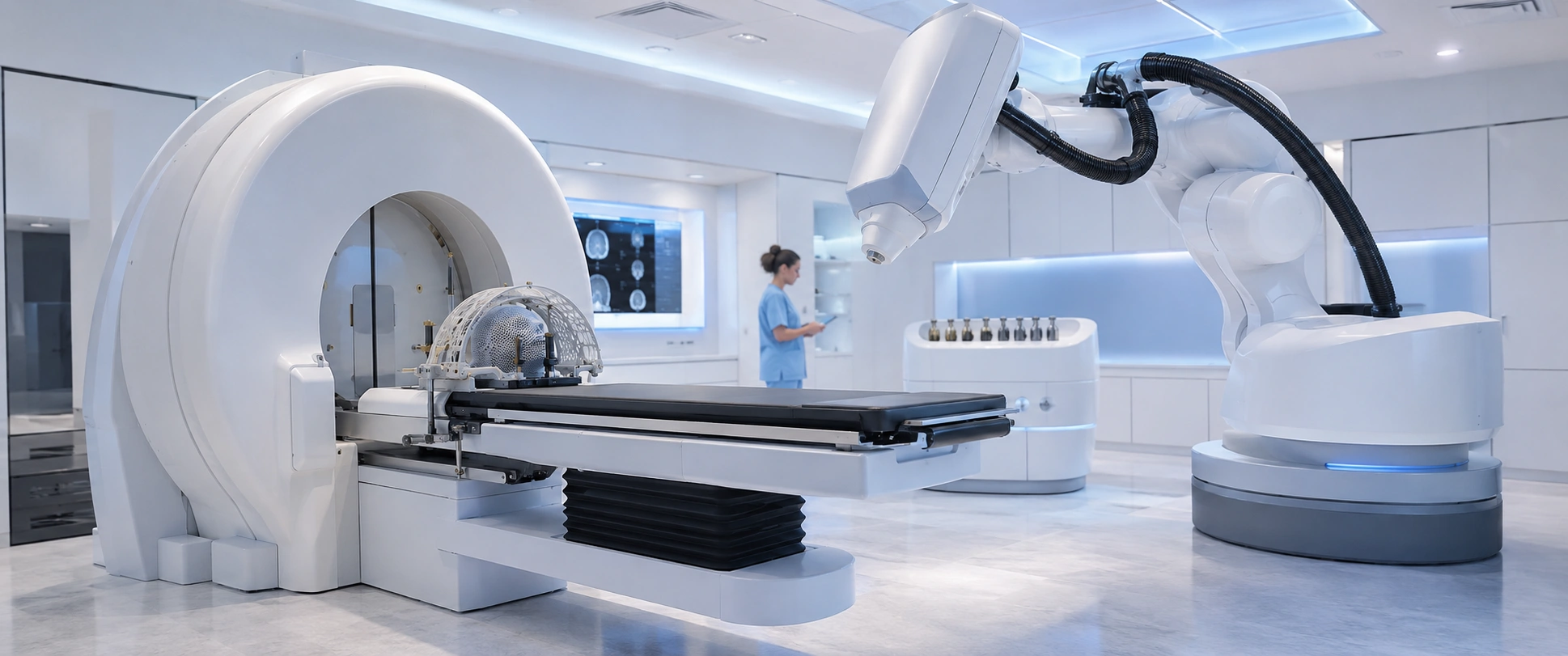
Radiosurgery is not traditional surgery. It uses precisely focused beams of radiation to destroy tumors without a single incision — ideal for small tumors, deep-seated tumors, multiple brain metastases, and patients who are not surgical candidates.
These procedures are typically completed in 1 to 5 sessions as an outpatient or short-stay patient. Cost in India: USD 5,000 to USD 10,000 for a full course.
For tumors that cannot be completely surgically removed, or as adjuvant treatment after surgery:
Proton therapy for brain tumors in India costs approximately USD 20,000 to USD 35,000 — versus USD 80,000 to USD 180,000 in the United States.
Standard chemotherapy protocols for brain tumors include:
Generic versions of many of these agents are produced in India, significantly reducing per-cycle costs.
Molecular profiling of brain tumors (IDH mutation, MGMT methylation, EGFR, BRAF V600E, and others) guides targeted treatment choices. India's top centres run comprehensive next-generation sequencing (NGS) panels to identify actionable mutations before treatment planning.
TTFields therapy — a wearable device that delivers alternating electric fields to disrupt tumor cell division — is available at select Indian hospitals as an adjunct treatment for GBM. This technology was approved by the US FDA and has shown survival benefit in GBM patients.
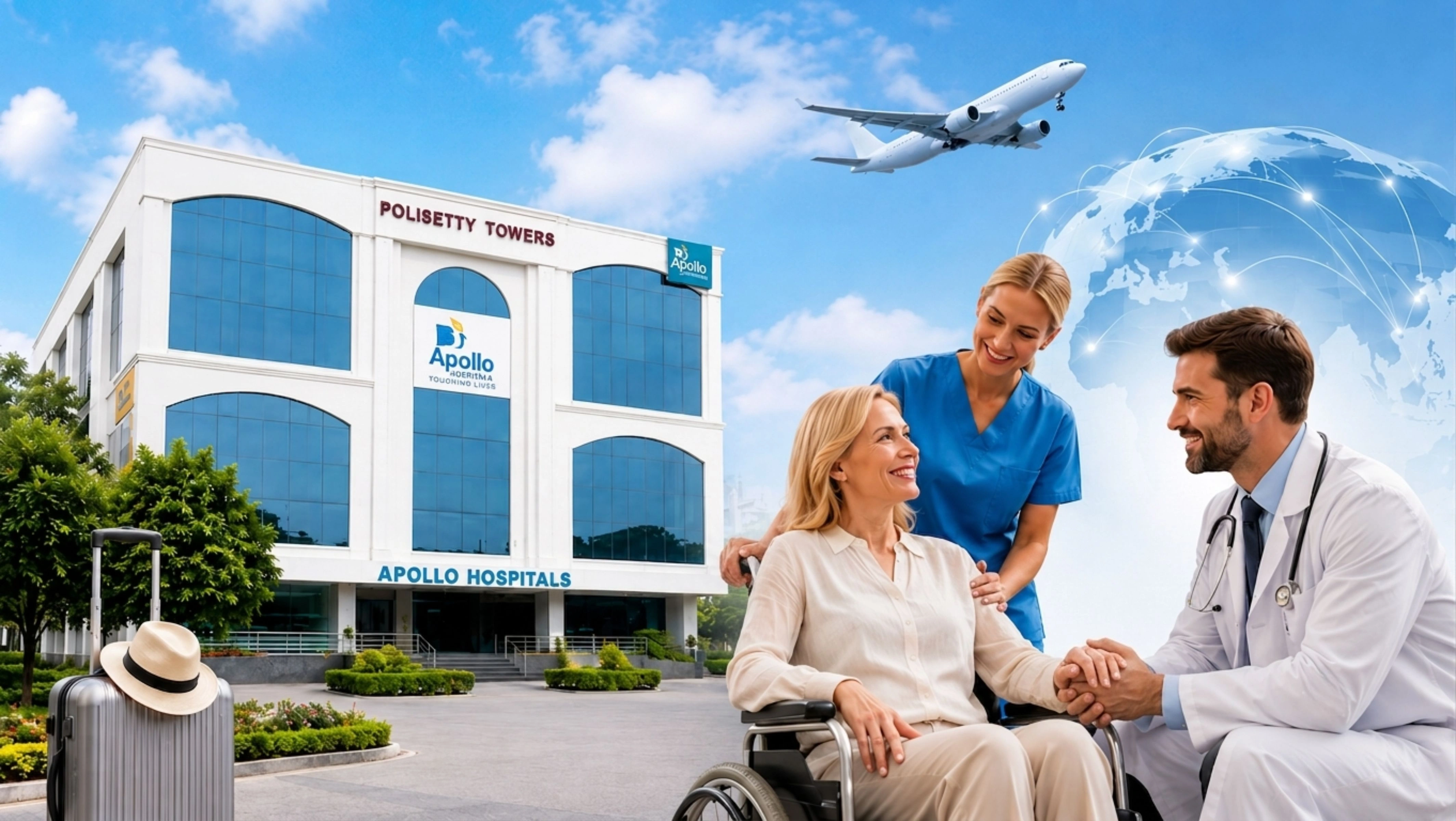
Apollo Hospitals is India's largest integrated private healthcare group with JCI accreditation across its flagship centres. The Apollo Neuro-Oncology programme covers the full spectrum from diagnosis to long-term follow-up.
Why Apollo: Home to Apollo Proton Cancer Centre in Chennai (South Asia's first proton therapy centre), advanced Gamma Knife suite, dedicated neuro-ICU, and neurosciences institutes in Delhi and Hyderabad. The Gamma Knife Centre at Apollo Hospitals Delhi is one of the busiest in Asia.
Best for: Proton therapy for brain tumors, Gamma Knife radiosurgery, complex neuro-oncology cases, post-surgical chemotherapy and radiation planning.
FMRI is consistently ranked among India's top three hospitals for neurosciences. Its Department of Neurosurgery and Neuro-Oncology uses intraoperative MRI, awake craniotomy, and neuro-navigation for complex brain tumor resections.
Why Fortis FMRI: The CyberKnife suite at FMRI is one of the most advanced in North India. The hospital has a dedicated tumor board — multidisciplinary teams of neurosurgeons, radiation oncologists, neuro-oncologists, and pathologists — that meets weekly to formulate personalised treatment plans.
Best for: High-grade glioma surgery, CyberKnife radiosurgery, brain metastases management, second-opinion consultations.
Max Saket's Institute of Neurosciences is a high-volume centre with experienced neurosurgeons performing over 2,000 brain surgeries annually. The hospital uses real-time intraoperative neurophysiology monitoring (IONM) and fluorescence-guided surgery.
Why Max: Excellent for patients from the UAE, Oman, KSA, and Iraq who fly into Delhi; proximity to IGI Airport (30 minutes), well-established international patient services division, Arabic-speaking care coordinators available.
Best for: Pituitary tumor endoscopy, glioma surgery, awake craniotomy, meningioma.
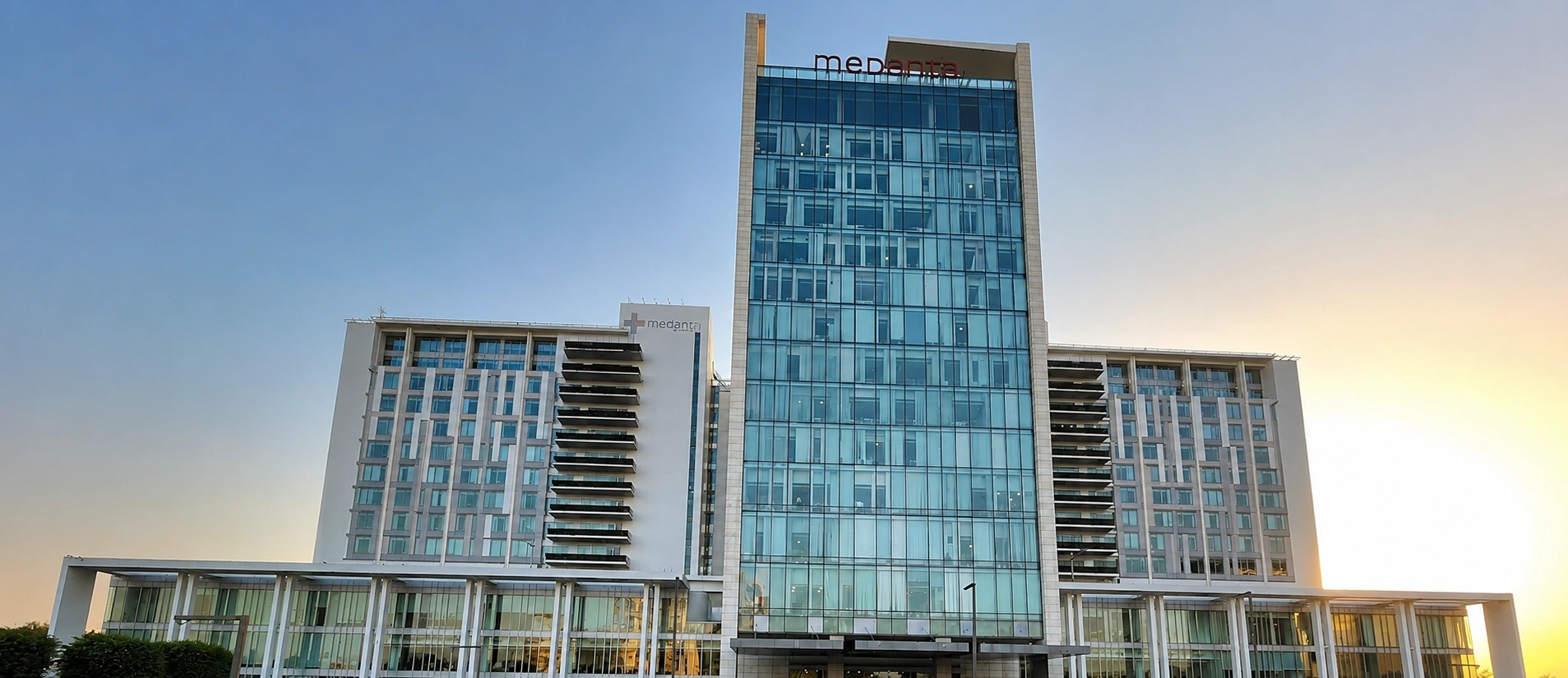
Founded by renowned cardiac and neurosurgeon Dr. Naresh Trehan, Medanta hosts one of India's most comprehensive Institutes of Neurosciences. The neurosurgery division handles 3,000+ cases annually, with dedicated brain tumor units covering adult and pediatric cases.
Why Medanta: Integrated brain tumor board, molecular tumor profiling lab, dedicated neuro-oncology ward, and 24x7 neuro-ICU. Multiple Gamma Knife suites on campus.
Best for: Complex skull-base surgery, pediatric brain tumors, recurrent tumor management, integrated radiosurgery.
Established in 1941, TMC is India's most prestigious oncology institution and one of Asia's oldest cancer centres. The Neuro-Oncology department at TMC manages the highest volume of CNS tumor cases in South Asia, with a strong research and clinical trial pipeline.
Why TMC: Unparalleled expertise in rare brain tumors, access to clinical trials for newly diagnosed and recurrent tumors, integrated pediatric neuro-oncology. The affiliated ACTREC facility has a proton therapy programme.
Best for: Rare CNS tumors, pediatric brain tumors, clinical trial access, CNS lymphoma, complex recurrent tumors.
Manipal Hospitals' Dhruva Neuro Centre in Bangalore is a dedicated neurological sciences facility with advanced intraoperative imaging, neuro-navigation, and a full suite of radiation modalities including IMRT and stereotactic radiosurgery.
Why Manipal: Strong academic backbone (linked to Manipal University), experienced multi-specialty neuro-oncology team, growing international patient programme for patients from Southeast Asia and Central Africa.
Best for: GBM, spinal cord tumors, skull-base surgery, integrated neuro-rehabilitation post-surgery.
Narayana Health built its reputation on delivering high-quality care at significantly reduced cost. The neurosciences programme at Narayana provides accessible, high-quality brain tumor care, particularly suited for patients from Ghana, Myanmar, and other regions with tighter budgets.
Why Narayana: Transparent pricing, no hidden costs, high surgical volume, and a genuine commitment to making advanced care affordable for international patients.
Best for: Budget-conscious patients requiring high-quality neurosurgery, meningioma, metastatic brain tumors.
,%20Bangalore.webp)
NIMHANS is a premier government autonomous institution and a UNESCO-listed centre of excellence in neurosciences. Its neurosurgery and neuro-oncology departments have handled tens of thousands of brain tumor cases over decades, producing some of India's finest neurosurgeons.
Why NIMHANS: Unmatched expertise in rare and complex neuro-oncology cases, access to research programmes, and significantly lower treatment costs for those eligible for government institution rates.
Best for: Complex rare brain tumors, academic second opinions, pediatric cases.
| Treatment | India | USA |
|---|---|---|
| Brain Tumor Surgery (Open Craniotomy) | USD 5,000 – 12,000 | USD 80,000 – 150,000 |
| Gamma Knife Radiosurgery | USD 5,000 – 8,000 | USD 25,000 – 45,000 |
| CyberKnife Radiosurgery | USD 6,000 – 10,000 | USD 20,000 – 40,000 |
| Proton Therapy (Full Course) | USD 20,000 – 35,000 | USD 80,000 – 180,000 |
| Full Chemotherapy Cycle (TMZ) | USD 400 – 1,500/cycle | USD 5,000 – 12,000/cycle |
| Intraoperative MRI-guided Surgery | USD 8,000 – 15,000 | USD 100,000+ |
| Hospital Stay (ICU, per night) | USD 150 – 400 | USD 5,000 – 10,000 |
All figures are approximate and vary by hospital tier, surgeon, and individual case complexity. Contact a medical facilitator for a personalised cost estimate based on your specific reports.
This is where many patients — and their families — feel most overwhelmed. Navigating hospital choices, understanding reports, choosing the right surgeon, arranging a medical visa, and planning travel logistics while dealing with a brain tumor diagnosis is genuinely complex.
This is exactly what a trusted medical tourism facilitator does.
Life Rx Healthcare is India's leading medical tourism company, headquartered in New Delhi, with over 20 years of experience connecting international patients from across the UAE, GCC, Africa, and Central Asia to India's finest hospitals and specialist neurosurgeons.
The Life Rx team has facilitated successful brain tumor treatment journeys for patients from UAE, Oman, KSA, Iraq, Yemen, Ghana, Myanmar, Kazakhstan, Uzbekistan, and Kyrgyzstan — handling every step from report review to safe return home.
What Life Rx Healthcare does for you — at zero facilitation cost to the patient:
You can explore the full range of treatments supported by Life Rx Healthcare, view partner hospitals, and connect with specialist doctors — all on one platform.
Get a free, personalised treatment plan within 24 hours: www.liferxhealthcare.com/appointment
Here is the complete journey for an international brain tumor patient working with Life Rx Healthcare:
Day 0 — Share Your Reports Send MRI brain (plain and contrast), any previous biopsy or pathology reports, operative notes if applicable, and a brief clinical summary via WhatsApp or email. Life Rx reviews within 24 hours.
Day 1–3 — Receive Your Treatment Plan Life Rx sends a personalised treatment recommendation: proposed hospital, proposed surgeon, estimated cost, and treatment timeline. No obligation. No hidden fees.
Day 3–7 — Confirm Appointment and Get Visa Letter Once you confirm, Life Rx arranges your appointment with the neurosurgeon and obtains the hospital visa invitation letter.
Day 7–21 — Apply for Indian Medical Visa Submit your visa application at the Indian Embassy with your hospital invitation letter. Most countries receive medical visas within 5 to 10 working days.
Arrival in India Life Rx's team meets you at the airport, arranges transport to your hotel or hospital, and your dedicated patient care manager is with you from this point.
Consultation (Day 1–2 in India) You meet your neurosurgeon and neuro-oncologist. Fresh imaging may be done. The treatment plan is confirmed or refined. A formal cost breakdown is issued.
Surgery / Treatment Procedure is performed as per the treatment plan. Life Rx ensures you understand every step in a language you are comfortable with.
Recovery and Discharge Post-operative care, ICU if required, physiotherapy or rehabilitation initiation, and oncology follow-up planning.
Return Home Life Rx coordinates your discharge summary, follow-up prescription, and any onward referrals. Continued remote monitoring support is provided.
For a broader understanding of the entire medical travel process, read: What to Expect from Medical Travel in India: Costs, Process & Care
When evaluating options, ask these questions — a good medical tourism facilitator will help you get clear answers:
For a comprehensive checklist, see also: 20 Questions to Ask Before Hiring a Medical Tourism Company in India